


UKRAINE IS DEFENDING AMERICA WITH ITS BLOOD, TOO

We usually assess political and geopolitical events through facts, figures, and the connections between them. When reports describe a successful Ukrainian counteroffensive, we examine the evidence supporting that claim. If those reports do not match the reliably established situation on the front line, we ask whether the discrepancy reflects incomplete information, an error, excessive optimism, or deliberate deception. Wars are fought with information as well as weapons.
This time, however, we will look at Donald Trump’s relations with the Kremlin and Ukraine primarily through the lens of values. Political decisions matter not only for their consequences, but also for their moral cost.
In an interview with Piers Morgan on October 14, Zelensky said of Trump’s stance toward Russia: “This is not the right side of history.” In our view, Zelensky is absolutely right. Putin’s regime invaded a neighboring country and is trying to break its people and destroy their right to determine their own future. Those responsible for the aggression and crimes committed in Ukraine must be brought to justice.
Negotiating with Russia may be necessary. But negotiations are no excuse for forgetting who attacked and who is defending themselves. When Trump expresses admiration for Putin, who bears responsibility for the genocide of Ukrainians and the killing of children, the shock and disgust can obscure what is happening: the country under attack is being pressed to make concessions while the aggressor is being offered new economic opportunities. When one of the world’s most powerful countries offers Russia new sources of revenue to continue its war, a legitimate question arises: at whose expense, and for whose benefit, is a deal being pursued?
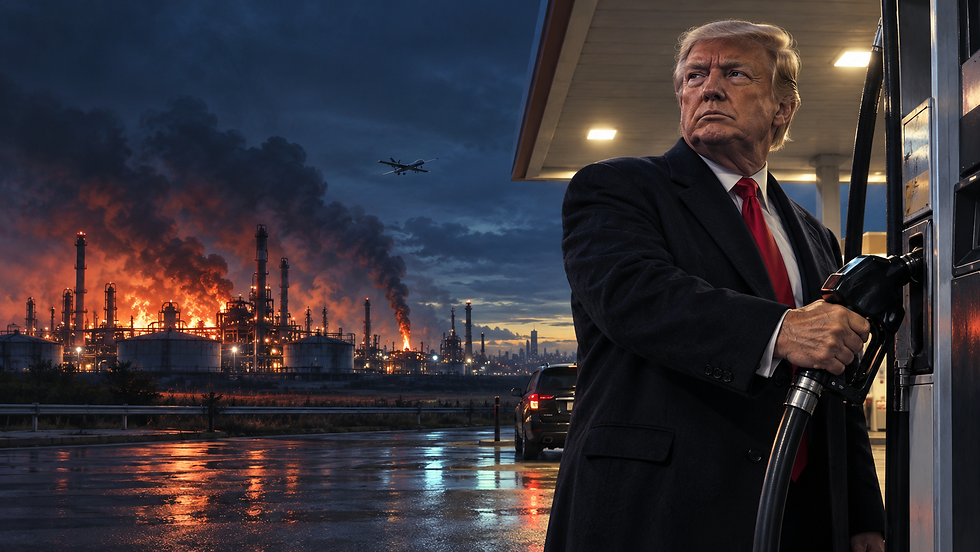
Trump’s deal on Russian diesel and his call for Ukraine to replace its president are concrete decisions and statements by which we can judge his position. Ukrainians have every right to ask why their partner is putting pressure on them rather than Moscow, and why it is filling the coffers of the terrorist state attacking them.
The title of peacemaker is earned not through a politician’s own pronouncements, but through the substance of the peace they achieve. An agreement that rewards the aggressor and leaves the victim vulnerable is no basis for historical greatness. Such a “peace” may prove to be little more than an interval before the next war.
Nor is a long tenure in power proof of good governance or national strength. A leader who cannot be removed through free elections is not inherently stronger than one who must answer to the public. The ability to silence criticism, imprison opponents, and deny people the right to choose another government demonstrates the power of a repressive apparatus. It has nothing to do with the strength of a free society.
The foundations of American strength include liberty, democratic institutions, and the ability to criticize and replace those in power. In other words: freedom of speech, human rights, the rule of law, and the government’s obligation to abide by it. America has not always lived up to its professed ideals. Yet those very ideals have enabled its people to demand change, right wrongs, and move forward. They are why America was our guiding star for decades.
During the Soviet occupation, the United States was a symbol of freedom and a source of inspiration to us. Huddled close to our VEF radios, we listened to Voice of America broadcasting from Washington. The voices breaking through Soviet jamming, the encouragement, the message to hold on and refuse to submit to the occupiers, the tears in our grandparents’ eyes—all of this was vital to us. It helped us preserve our hope and our determination to fight for our freedom. It helped us retain our national identity and, in a sense, our moral bearings, even as some among us resigned themselves to occupation, gave in, or collaborated.
Our parents and grandparents waited for “the American” as though waiting for God himself, because to them he embodied freedom.
To this day, America is more than a country to us. We associate it with a promise: that freedom has defenders, and that subjugated nations will not be forgotten. What Trump is doing today undermines faith in that promise. That is precisely why it matters so much to us that Ukraine’s president, Zelensky, found the strength to state publicly what he thinks of the US president’s choices. And it matters not only to us, but to almost all Ukrainians.
Dear God, could we ever have imagined, even in our worst nightmares, that an American leader would demand the replacement of an invaded country’s president while striking deals with the bloodstained dictator attacking it?
The call to replace Zelensky rests on the false assumption that one man is the principal obstacle to an agreement—as though another leader could simply take his place, accept Moscow’s terms, and end the war. Zelensky leads Ukraine, but its will to defend itself does not depend on him alone—or, more precisely, not nearly as much as some might wish. Ukrainians are fighting for their homes, their loved ones, and their right to live in their own country. Replacing the president would not, in itself, end either Russia’s aggression or Ukrainians’ determination to preserve their independence.
Ukraine’s fate cannot be settled simply by agreeing on who should lead it. Nor, for that matter, can the fate of any country.
Ukraine’s resistance rests on its armed forces, state institutions, volunteers, communities, and people who “cast their ballots” every day by choosing not to give in. Even Zelensky’s departure would therefore not, in itself, mean an end to the struggle. Ukraine is more than its president.
Through their resistance, Ukrainians are defending the principle that the stronger have no right to use force to dictate how the weaker should live. That principle matters to America, too: a world in which aggression is rewarded becomes more dangerous both for its allies and for America itself. If conquest pays and resistance is punished with pressure to concede, other aggressors receive a clear lesson. Timothy Snyder goes further: by trying to use force to decide the fate of a weaker country, Trump is leading the United States toward suicide.
Ukraine’s defense raises the cost of aggression. It also reminds Americans, and all of us, that freedom is sustained by the blood of people who choose to defend it of their own free will, without being forced. Democratic institutions and rights are not eternal possessions that can be taken for granted. They are preserved by people who refuse to let those in power turn the state into their private property.
In this sense, Ukraine is defending not only Europe but also America with its blood—the principles essential to America’s security and the ideal of freedom with which it inspired the world. Thank God, Trump is not America. America is not Trump. Its people, institutions, and tradition of liberty are greater than the policies of any single administration.
People from many nations built America. Hundreds of thousands of Lithuanians contributed to building it, too. That is why we care which side the United States chooses and what kind of world it helps create.
We believe that the values for which we have fought, and continue to fight, shoulder to shoulder with Americans will be defended. Together with Ukraine and a free Europe, America will defend the right of nations to determine their own destiny. We will recognize that symbol of freedom by its deeds: support for those under attack, accountability for aggressors, and fidelity to its own principles.



Comments